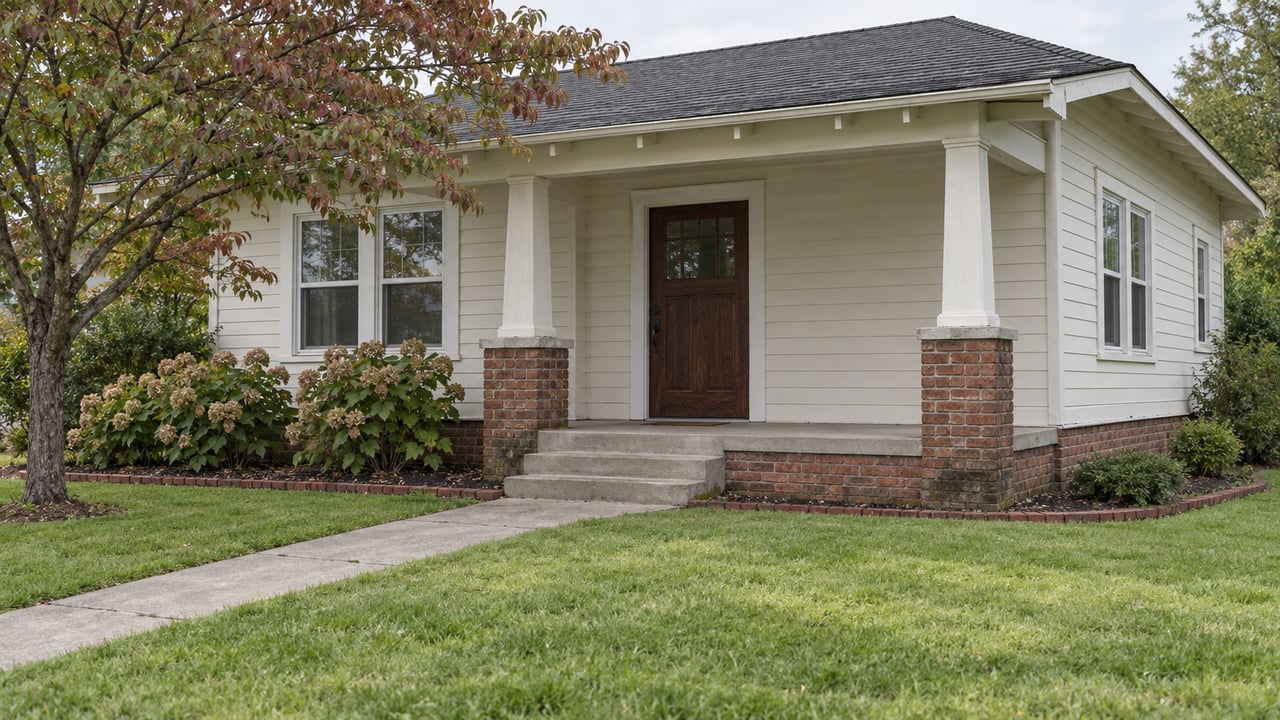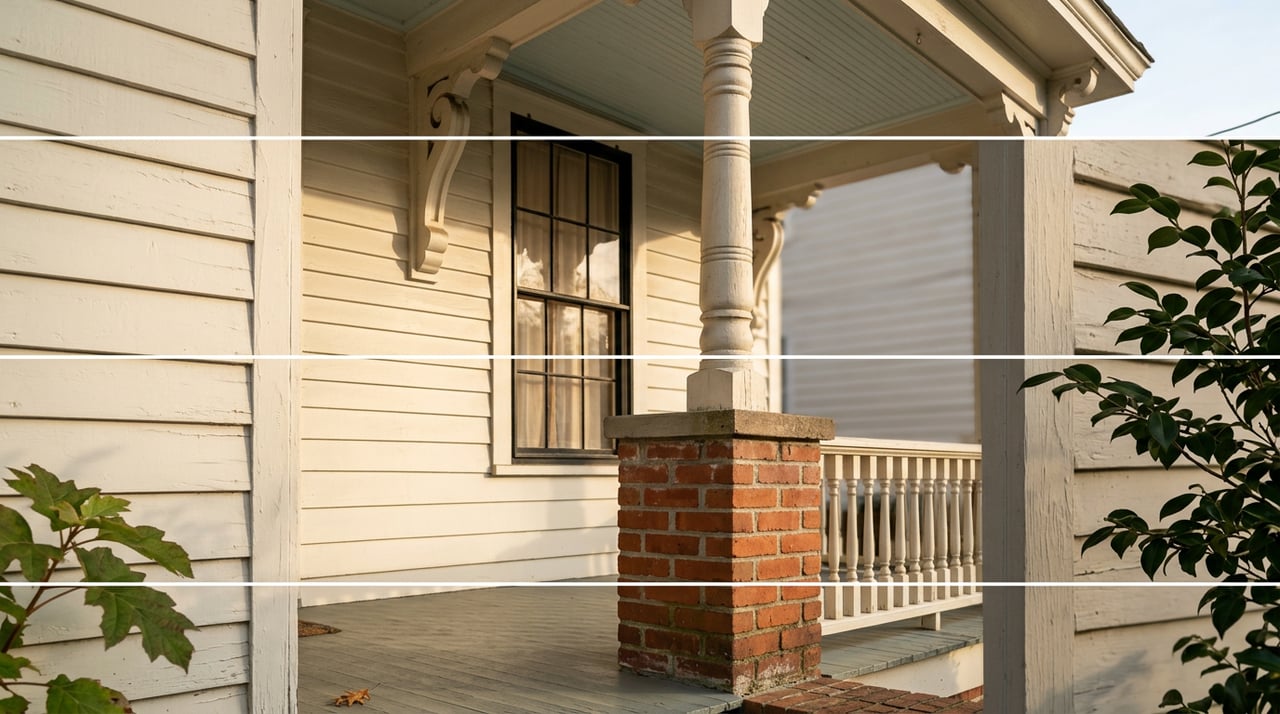
Picture two frame houses across the street from each other in Parkridge, both built in the 1890s, both with the deep porches and gabled rooflines that define the neighborhood. One owner wants to replace a rotted window. He calls a contractor, pulls a standard permit, and the work is done in a week. The other owner wants to replace the same kind of window on the same kind of house. She has to file an application, wait for a decision from either city planning staff or the Historic Zoning Commission, and depending on the scope of the work, she may be waiting for a commission vote that only happens once a month.
Same block. Same era. Same architecture. Different rules entirely.
That gap is not a hypothetical. It is the practical result of how Knoxville's local historic protection actually maps onto Parkridge, and it is the single most important thing to understand before you buy, sell, or renovate here. Most people assume that a neighborhood with "historic" in its reputation carries one uniform set of expectations. Parkridge doesn't work that way, and the difference has shaped a real fight at Knoxville City Council.
What the H-1 Overlay Actually Requires
Start with the mechanics, because they are more specific than most buyers expect.
If a property sits inside a locally designated Historic Overlay, known as H-1 in Knoxville's zoning code, any exterior change needs a Certificate of Appropriateness before a building permit can be issued. That includes things a homeowner might assume are routine: replacing windows, changing siding, altering a porch, even some fencing and paint choices on masonry.
The review isn't one-size-fits-all. Projects are sorted into levels, and the level determines who signs off. Minor work can be cleared at the staff level. Anything more substantial has to go in front of the Knoxville and Knox County Historic Zoning Commission, which meets monthly on the third Thursday at 8:30 a.m. If your renovation timeline assumes you can get a contractor scheduled and start work within a couple of weeks, a Level 2 or higher project inside an H-1 zone can blow that timeline up simply by landing on the wrong side of a monthly meeting calendar.
The city's historic preservation planner can tell you which level your project falls into and walk you through the application. That is worth a phone call before you sign a contract, not after.
The Boundary Problem
Here is where it gets more interesting, and where a lot of general Parkridge content stops short.
Much of Parkridge sits inside the Edgewood-Park City Historic District, which is listed on the National Register of Historic Places. National Register listing is largely honorific. It documents significance and can open the door to certain tax incentives, but it does not, by itself, give the city or county any authority to review or block exterior changes.
Local H-1 zoning is the enforcement mechanism. And for years, Parkridge's National Register boundary and its enforced H-1 boundary did not match. The neighborhood's west side carried H-1 protection. The east side, despite sitting inside the same nationally recognized historic district, did not.
That mismatch became a genuine civic fight. Beginning around 2015, the Parkridge Community Organization pushed to extend H-1 protection across the east side, arguing that absentee ownership and neglected properties were putting the district's remaining historic housing stock at risk. The proposal made it to Knoxville City Council, which approved the expansion on a 6-3 vote at first reading in November 2017. Before the second reading could happen, Mayor Madeline Rogero asked Council to table it, citing deep division within the neighborhood itself over the added cost and paperwork the designation would place on homeowners, particularly lower-income residents and those managing rental properties. You can read the mayor's full statement on the city's own site.
The city's Edgewood-Park City design guidelines were updated again in 2025, which tells you the conversation around this district's protections hasn't gone quiet. What it means for you as a buyer or seller is simple and durable regardless of where that policy conversation lands next: never assume a Parkridge address carries local historic protection just because it looks the part or sits inside the National Register boundary. Confirm it specifically for that parcel.
The Knox County GIS zoning map is the fastest way to check. Pull up the address, click into zoning, and see whether H-1 actually applies. It takes less time than reading this paragraph, and it can save you from discovering mid-renovation that a project you assumed was routine now needs commission approval.
Contributing vs. Non-Contributing Changes What You Can Actually Do
Even within an H-1 boundary, not every house is treated the same way. Properties inside a historic district are classified as either contributing or non-contributing.
| Status | What it means | What it changes for you |
|---|---|---|
| Contributing | Built within the district's period of significance and retains enough original character to reflect it | Exterior changes are held to a stricter standard matched against the district's design guidelines |
| Non-contributing | Altered from its original appearance, or built outside the period of significance | Exterior review still applies inside H-1, but with more flexibility for proposed changes |
If you're comparing two Parkridge listings that look similar on the surface, this classification is worth asking about directly. A contributing structure with an intact original porch and a non-contributing structure with a 1980s addition can face very different levels of scrutiny for the exact same proposed change, even sitting on the same street.
The Second Approval Track Nobody Mentions
The H-1 overlay only governs the exterior. Interior renovations don't require a Certificate of Appropriateness at all. But that doesn't mean interior work in a Parkridge house is friction-free, and this is where a lot of buyers get surprised twice on the same project.
Homes built before the 1960s throughout older Knoxville neighborhoods, Parkridge included, commonly still have knob-and-tube wiring somewhere in the walls. That wiring isn't code-compliant under current standards, and touching it, whether you're removing it, replacing it, or just adding new circuits in a basement that still has old K&T runs upstairs, triggers its own electrical permit process, entirely separate from historic zoning review.
So a full kitchen renovation in a contributing Parkridge house can mean running two approval tracks in parallel: a Certificate of Appropriateness for any exterior change tied to the project, and a standard building and electrical permit process for the interior work, which may itself uncover wiring that needs remediation before the county will sign off on a final inspection. Budget time and money for both, not just the one that's visible from the street.
What to Actually Do Before You Buy or Renovate
A few concrete steps, in order:
- Pull the parcel on the Knox County GIS map and confirm H-1 status specifically, not just National Register status.
- If H-1 applies, ask whether the structure is classified contributing or non-contributing.
- Call the city's historic preservation planning staff before finalizing renovation plans, especially for anything beyond routine maintenance, so you know what level of review you're facing and how that lines up with the monthly Historic Zoning Commission calendar.
- If the home is pre-1960s construction, ask specifically about the condition of the electrical system. Assume knob-and-tube may be present until an inspection says otherwise.
- If you want a ground-level read on how a specific block feels about preservation, the Parkridge Community Organization holds regular neighborhood meetings. Confirm current timing directly with the organization, since meeting schedules shift.
A Few Questions Worth Asking Directly
Does H-1 zoning affect my mortgage or insurance? Not directly. Lenders and insurers care about the condition and safety of the structure, not its zoning overlay. Where H-1 matters financially is in renovation cost and timeline, since design-compliant materials and commission-approved changes can cost more and take longer than a standard remodel.
If my house is only National Register listed, not H-1 zoned, can I do whatever I want to the exterior? Locally, yes, the city has no design review authority without the local overlay. You'd still need standard building permits for the work itself.
How long does Certificate of Appropriateness review actually take? It depends on the level. Staff-level approvals can move quickly. Anything requiring a Historic Zoning Commission vote is tied to that monthly third-Thursday meeting, so plan your timeline around that calendar rather than a standard contractor schedule.
Parkridge's history is genuinely part of its value. Streetcar-era bones, walkable blocks close to downtown, and a neighborhood identity that's held up over more than a century all matter to buyers who want character over a subdivision. But character comes with a paperwork trail that isn't the same from block to block, and knowing which side of that line your future house sits on is the difference between a smooth renovation and a stalled one.
If you're looking at a specific address in Parkridge and want a straight answer on what its historic status actually means for your plans, that's exactly the kind of question Shannon Foster-Boline helps buyers and sellers work through before it becomes a surprise. Reach out for a neighborhood consultation or a home valuation, and let's figure out what your specific property allows before you're mid-renovation trying to find out the hard way.