Buying in Powell often comes down to one big question: do you want the character and flexibility of an established street, or the predictability and amenities of a newer planned community? If you are weighing both, you are not alone. Powell sits in an area of north Knox County where long-standing residential pockets and newer development are meeting in real time, which gives you real choices depending on how you want to live. This guide will help you compare the two in practical terms so you can decide what fits your goals best. Let’s dive in.
Why Powell offers both options
Powell is part of a stretch in north Knox County that continues to see residential growth, especially along the W. Emory Road corridor between Karns and Powell. At the same time, the broader area still includes more rural, agricultural, and wooded character around the edges.
That mix matters when you start home shopping. It helps explain why you can still find more established streets with varied homes and lot sizes, while also seeing newer communities designed around a more coordinated lifestyle experience.
What established Powell streets feel like
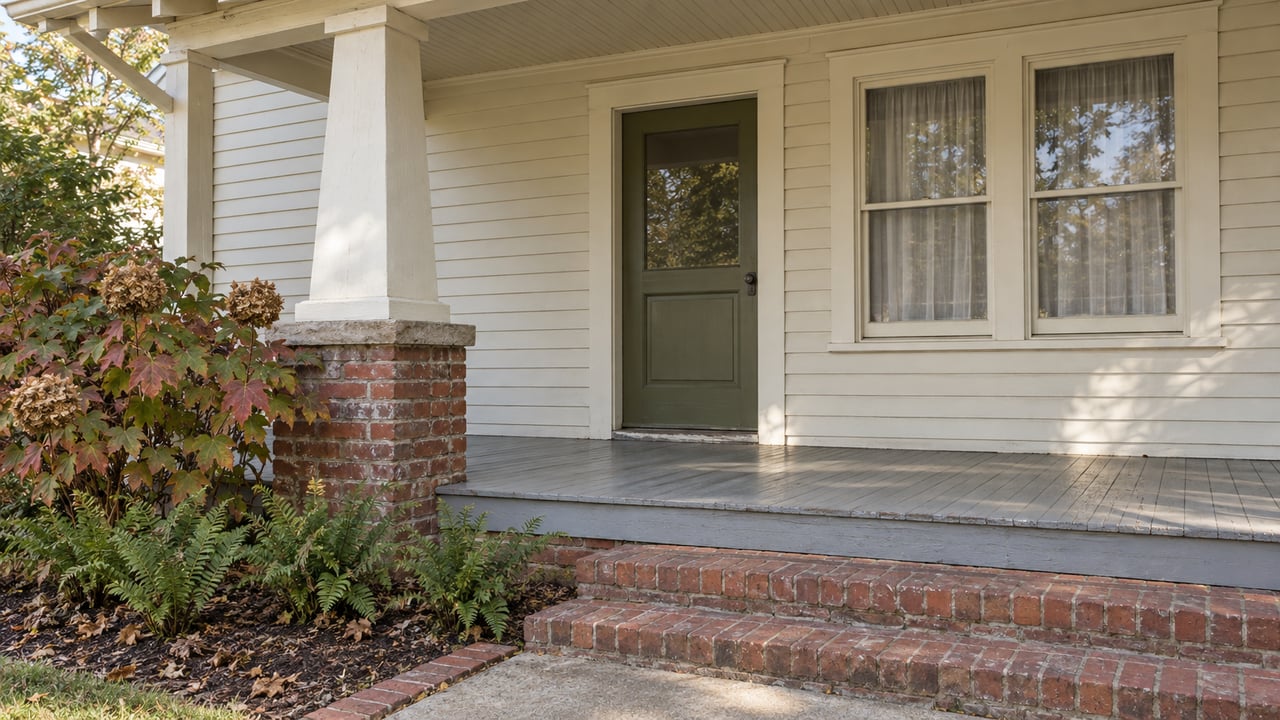
Established Powell neighborhoods tend to offer more variation from one property to the next. In recent listing examples, lot sizes ranged from about 0.36 acres to 0.62 acres, with some homes on half-acre lots and some properties advertised with no HOA or no restrictions.
That variety is often part of the appeal. Instead of a highly uniform streetscape, you may find homes from different decades, different lot shapes, and a less standardized look overall.
A current Powell example also shows a 1960-built home on a 0.3-acre lot with no HOA. That does not define every older neighborhood, but it does support the idea that established areas often come with more personality and fewer design controls than newer communities.
Common features in older areas
If you are considering an established Powell neighborhood, you may notice a few recurring patterns:
- More variation in home age and style
- Wider swings in lot size
- Less uniform layout from street to street
- In some cases, no HOA or lighter restrictions
- Mature neighborhood fabric rather than a newly built environment
Nearby planning materials also show that subdivision lot sizes in the area can vary significantly, from smaller suburban lots to much larger adjacent parcels. For you as a buyer, that means it is important to look at each street and each property individually rather than assume every older neighborhood will offer the same setup.
What newer planned communities offer
On the other side of the Powell conversation is the newer planned community model. Belltown, located near the edge of Karns bordering Powell, is one of the clearest examples of this newer style of development in the area.
Belltown is designed as a master-planned, mixed-use community rather than a traditional single-product subdivision. Plans include estate lots, front-loaded single-family homes, alley-loaded rear-entry homes, townhomes, apartments, commercial space, and a large amount of greenspace.
That makes it a different type of neighborhood choice. Instead of simply buying a house on a street, you are buying into a broader vision with multiple housing types and a more coordinated community plan.
Belltown by the numbers
According to planning documents and community materials, Belltown includes:
- 24 estate lots
- 414 front-loaded traditional lots
- 123 alley-loaded rear-entry lots
- 213 townhomes
- 324 apartments
- 64,000 square feet of commercial space
- 111 acres of greenspace
- 40 acres for public recreation
- 40 acres for private recreation
The official community information also describes half-acre estate lots, 65-foot and 55-foot front-loaded lots, alley-loaded single-family lots, townhomes, apartments, and a town center.
Design consistency versus individuality
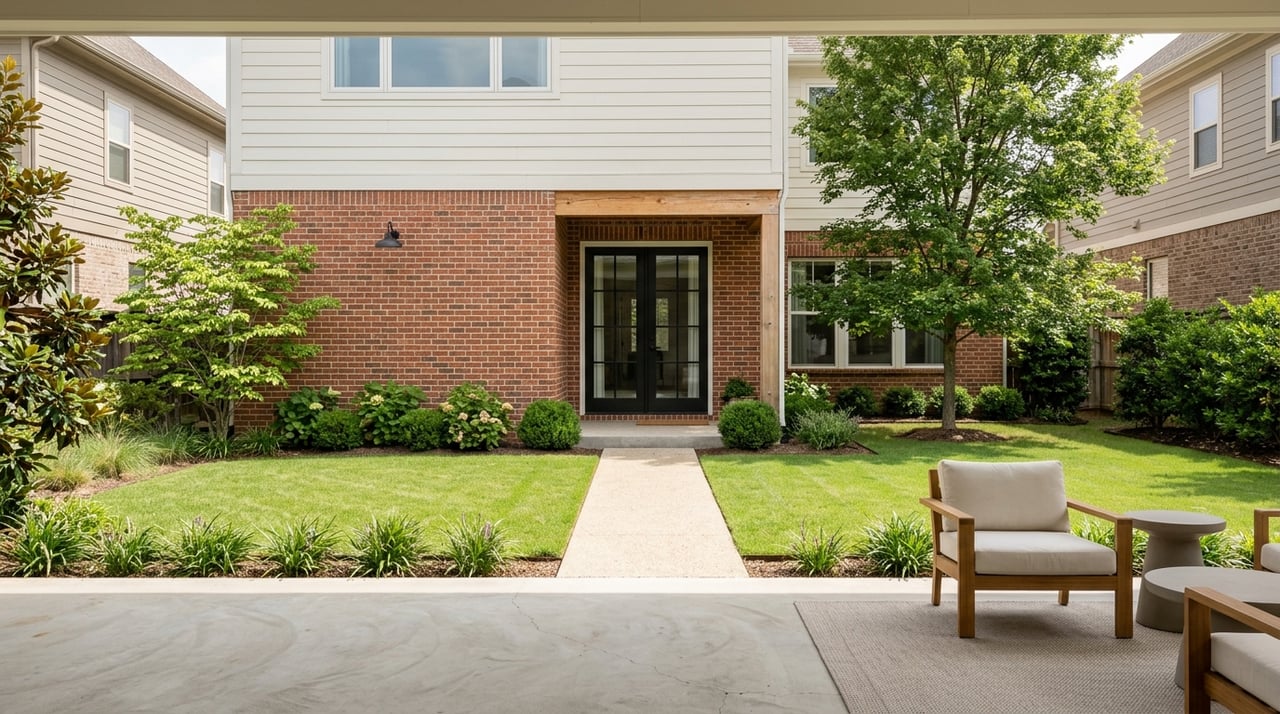
One of the biggest differences between established Powell streets and a place like Belltown is design consistency. In an older neighborhood, design can vary quite a bit from house to house. In a planned community, the look and layout are usually more intentional.
Belltown planning documents outline minimum lot widths and minimum lot areas for several housing sections. The site also emphasizes a Craftsman-style architectural direction and a more unified design language across the community.
If you like a curated streetscape, that may feel appealing. If you prefer homes and streets with more visual variation, established neighborhoods may feel more natural to you.
Lot size and outdoor space differences
Lot size is often a major deciding factor. Established Powell listings show examples of 0.36-acre, 0.48-acre, 0.5-acre, and 0.62-acre lots, which can appeal if yard space and flexibility are high priorities.
In Belltown, the range is broader by housing type, but many of the planned single-family sections are built around smaller minimum lot standards. Planning documents list minimum lot widths of 40 feet for front-loaded homes, 30 feet for alley-loaded homes, and 50 feet for side-loaded homes, with minimum lot areas of 4,000 or 5,000 square feet in single-family sections.
That does not make one option better than the other. It simply means you are comparing two different experiences: more private yard potential in some established areas versus a more compact, amenity-oriented layout in a planned community.
HOA and rules to expect
For many buyers, HOA structure is where the decision becomes clearer. Established Powell neighborhoods are more likely to include homes with no HOA or fewer restrictions, based on recent listing examples.
Belltown appears to operate with a more formal homeowners’ association structure. Buyer materials state that the HOA will be integral to the community, and current listings commonly show HOA dues of about $65 per month.
When fewer rules may appeal
An established neighborhood may be worth a closer look if you want:
- Lower monthly carrying costs
- Fewer community-wide rules
- More freedom in how you use your property
- A street that feels more settled and less coordinated
When a formal HOA may feel worthwhile
A newer planned community may fit better if you want:
- Shared amenities
- A more uniform neighborhood appearance
- New construction options
- A community designed around a long-term vision
Amenities and convenience
Amenities are one of the strongest selling points for newer planned communities. Belltown’s materials describe private walking trails, sports fields, private parks, a swimming pool, and a clubhouse.
The broader vision also includes a 40-acre public park, recreation fields, a playground, a dog park, a kayak launch, picnic areas, an amphitheater, and a commercial district planned for shops, restaurants, medical services, fitness, salon, spa, and ice cream.
Recent updates show that parts of the commercial district are continuing to open in 2025 and 2026, including Covenant Health, Sugar Queen, Soccer Taco, and Abridged Burger Co. That tells you the live-work-play concept is active, but also still evolving.
Established Powell neighborhoods usually offer a different kind of value. Instead of on-site amenities, the appeal may be larger yards, mature surroundings, and a neighborhood feel that is already established.
Resale and long-term fit
When you think about resale, it helps to focus less on which option is universally better and more on which buyer pool each type attracts. Established neighborhoods may continue to appeal to buyers who want mature surroundings, larger lots, more individuality, and fewer restrictions.
Newer communities like Belltown may draw buyers who want a newer home, shared amenities, and a more lifestyle-driven environment. Because the W. Emory corridor continues to see development pressure, both types of housing are likely to stay relevant in the Powell area.
The real question is whether you want a neighborhood that feels settled today or a planned community that is still adding parts of its long-term vision. Your answer can shape not only how you live now, but also how your home may appeal to future buyers.
How to choose in Powell
If you are comparing established Powell streets with newer communities, start by getting honest about your daily priorities. Think about how much yard space you want, how you feel about HOA structure, whether amenities matter to you, and how important home age and design consistency are in your search.
It can also help to compare not just homes, but lifestyles. A larger older lot with no HOA may suit you if flexibility is the goal. A planned community may be the better fit if you want neighborhood amenities, a newer build, and a more coordinated environment.
In Powell, both paths can make sense. The right choice depends on the life you want your home to support.
If you want help sorting through Powell’s established neighborhoods, new communities, and the tradeoffs between them, Shannon Foster-Boline with Realty Executives Associates can help you narrow the options and move with confidence.
FAQs
What is the main difference between established Powell neighborhoods and newer communities?
- Established Powell neighborhoods often offer more variation in lot size, home age, and restrictions, while newer communities like Belltown are more planned, more uniform in design, and built around amenities and HOA structure.
Do established Powell neighborhoods usually have larger lots?
- They often can, based on recent listing examples that showed lots around 0.36 to 0.62 acres and some half-acre properties, though lot size still varies by street and property.
Does Belltown in the Powell area have an HOA?
- Yes. Buyer materials describe the homeowners’ association as an integral part of the community, and current listings commonly show HOA dues of about $65 per month.
What amenities are planned in Belltown near Powell?
- Community materials describe walking trails, sports fields, private parks, a pool, a clubhouse, a public park, playground, dog park, kayak launch, picnic areas, amphitheater, and a commercial district that continues to add tenants.
Are older Powell neighborhoods more flexible for homeowners?
- They can be, especially where listings note no HOA or no restrictions, but flexibility depends on the specific property and neighborhood.
Is Powell still growing with new development?
- Yes. Knox County planning materials indicate continued residential development along the W. Emory Road corridor between Karns and Powell, even as parts of the area still retain rural and wooded character.