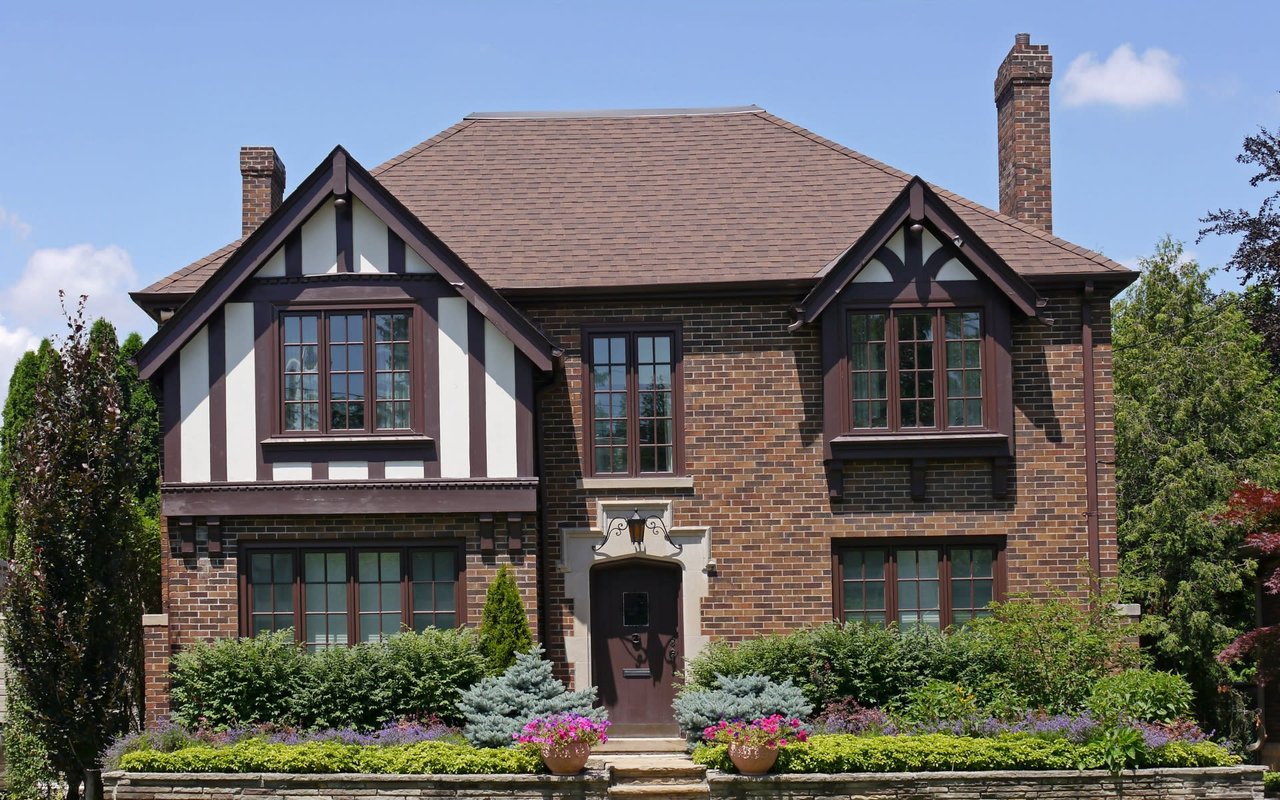
Driving through Lindbergh Forest in South Knoxville, it’s easy to imagine the early days of automobile travel, when Model T cars once moved slowly through this wooded residential enclave. Developed in the late 1920s as one of Knoxville’s early “automobile suburbs,” Lindbergh Forest is defined by narrow, winding streets, mature trees, and a collection of romantic and historically significant homes.
The neighborhood features an impressive mix of Tudor Revival, Colonial Revival, and Bungalow-style residences, many constructed with locally sourced Tennessee stone and marble. Adding to its architectural interest, Lindbergh Forest is also home to two of the five surviving Lustron houses in Knoxville—enamel-clad, prefabricated homes built after World War II that provide a striking contrast to the surrounding stone architecture.
In recognition of its historical and architectural importance, several dozen homes in the neighborhood were added to the National Register of Historic Places, officially designating the area as the Lindbergh Forest Historic District.
Lindbergh Forest’s layout emphasizes discovery rather than uniformity. Streets curve naturally through rolling, wooded terrain, creating a sense of separation from nearby commercial corridors despite the neighborhood’s central location.
While the majority of homes reflect early- to mid-20th-century architecture, some newer residences are located near the edges of the neighborhood along Woodlawn and Taliwa, providing a subtle blend of historic and more recent construction without altering the area’s overall character.
Distinctive details—such as the neighborhood’s wrought-iron-topped lampposts—reinforce Lindbergh Forest’s enduring identity as one of Knoxville’s quieter historic gems.
Lindbergh Forest is located just minutes from Chapman Highway, yet feels worlds away from its traffic and activity. Its proximity to the Henley Street Bridge allows for an easy commute to Downtown Knoxville and the University of Tennessee, while also offering convenient access to South Knoxville destinations and routes leading toward the Great Smoky Mountains.
This combination of accessibility and seclusion is a defining feature of the neighborhood.
Residents of Lindbergh Forest are drawn to the neighborhood for its wooded landscape, historic homes, and sense of continuity. The area’s residential scale and established surroundings foster a quieter, more personal atmosphere than larger or more heavily developed neighborhoods.
Lindbergh Forest is part of the broader South Knoxville area, which includes several established neighborhoods known for architectural variety, historic development, and close proximity to downtown.
Lindbergh Forest appeals to buyers who value historic architecture, wooded streets, and a neighborhood that feels removed from the pace of the city while remaining centrally located. It’s particularly well suited for those who appreciate craftsmanship, architectural detail, and a residential environment shaped by history rather than trend.
Buyers drawn to neighborhoods with similar character may also want to explore nearby Lake Forest or Island Home, two South Knoxville communities known for their distinctive architectural styles and long-term residential appeal.